






Labrador and Golden Retrievers rank among the most effective psychiatric service dogs due to their exceptional trainability and empathetic nature. You’ll find these breeds excel at specialized mental health tasks like deep pressure therapy and emotional grounding. Clinical studies show service dog partnerships reduce PTSD diagnosis odds by 66% and markedly lower anxiety and depression levels. While breed matters, a dog’s individual temperament and proper training ultimately determine their success in supporting your mental health journey.
Understanding Service Dogs vs. Emotional Support Animals

When seeking support for mental health conditions, understanding the crucial differences between Service Dogs and Emotional Support Animals (ESAs) can help you make an informed decision about which option best suits your needs.
The key service dog differences lie in training and legal protections. Service Dogs undergo specialized training to perform specific tasks that assist with your disability, including mental health needs. Their intensive training typically takes two to four months to complete. Service Dogs are trained to help with tasks like psychiatric assistance for various mental health conditions. They’re protected under the ADA, granting them access to public spaces, workplaces, and transportation. ESAs, while providing valuable emotional support, don’t require specialized training and focus solely on companionship. ESAs can help individuals manage conditions like depression and anxiety through their presence and affection.
While both animals receive protection under the Fair Housing Act, ESAs don’t have the same public access rights as Service Dogs. You’ll need documentation from a mental health professional for an ESA, while Service Dogs typically require certification from accredited training programs.
Top Dog Breeds for Mental Health Support
While numerous dog breeds can provide mental health support, certain breeds consistently demonstrate superior capabilities in service roles due to their inherent traits and trainability. When selecting service animals, you’ll find that breed-specific characteristics notably impact their effectiveness in mental health support roles. The importance of certification through proper evaluation testing ensures these dogs can handle the demands of mental health support work.
Service dogs’ effectiveness in mental health support largely depends on breed-specific traits that determine their ability to serve and adapt.
- Labrador and Golden Retrievers excel in broad-spectrum mental health support, offering exceptional trainability for tasks like PTSD response, medication reminders, and anxiety interruption. Individual temperament assessment is crucial for determining each dog’s suitability regardless of breed.
- For those requiring calm companionship, Greyhounds and Shih Tzus provide gentle, soothing presence without overwhelming energy levels, particularly beneficial in trauma recovery. Regular grooming sessions create opportunities for emotional bonding between owner and pet.
- Small-space dwellers might consider Dachshunds or Boston Terriers, which offer effective emotional support while maintaining manageable size requirements for urban living.
These dog breed comparisons highlight how different breeds’ natural tendencies align with specific mental health support needs.
Training Requirements and Specialized Tasks
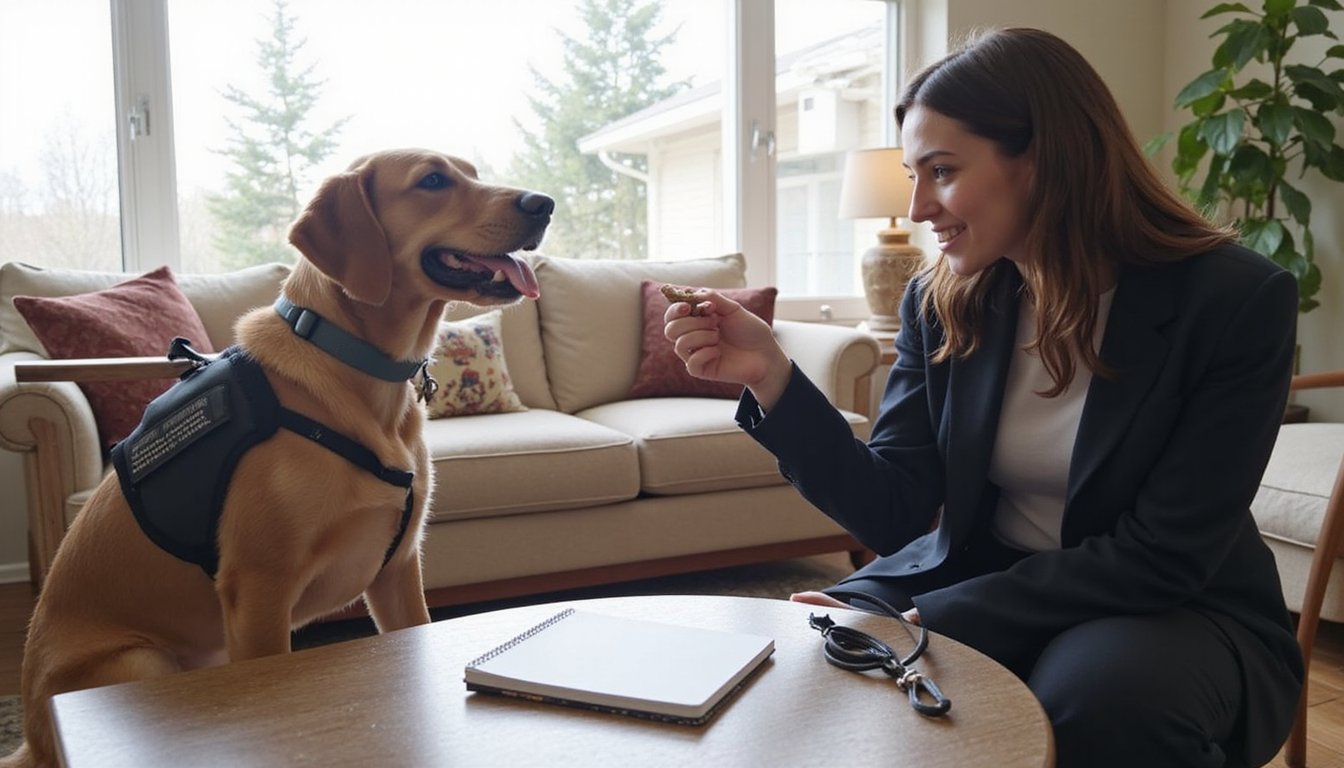
Service dog training involves rigorous preparation and specialized task development to meet mental health support requirements. You’ll need to guarantee your dog masters basic obedience before progressing to task conditioning for specific mental health interventions, such as deep pressure therapy or interrupting self-harm behaviors. A proper diagnosis from a licensed mental health professional must be obtained before beginning service dog training. Service dogs fundamentally differ from emotional support animals in their specialized training and legal access rights.
Training includes extensive public exposure, where your dog learns to remain calm in crowded spaces while maintaining focus on their handler. Your service dog must also master specialized tasks like providing medication reminders, detecting emotional changes, and responding to panic attacks through physical interventions. You’ll participate actively in training sessions to demonstrate control and reinforce learned behaviors. Both in-person and online training options are available to accommodate different schedules and budgets.
Professional programs can guide you through this process, though you must commit to ongoing practice to maintain your dog’s reliability in performing these critical mental health support functions.
Mental Health Benefits and Success Stories
Research demonstrates compelling mental health benefits for individuals partnered with psychiatric service dogs. Clinical studies show these partnerships lead to 66% lower odds of PTSD diagnosis and significant reductions in anxiety and depression levels. The human-animal bond creates physiological benefits, including increased oxytocin levels, while supporting emotional regulation and crisis management. A recent pilot study involving 141 post-9/11 veterans provided strong evidence for service dogs as an effective complementary treatment approach. Service dog handlers report higher psychosocial functioning compared to those without service dogs, particularly in social and emotional domains. The comprehensive study conducted by K9s For Warriors has successfully paired over 1,000 veterans with service dogs at no cost to recipients.
- Veterans report improved social reintegration, stronger family dynamics, and reduced suicidal thinking after partnering with service dogs
- Employed individuals experience decreased absenteeism and enhanced work functioning, contributing to better quality of life outcomes
- Long-term partnerships yield measurable gains in emotional well-being, with users showing consistent improvements in psychological comfort and independence
These success stories highlight how service dogs complement traditional mental health treatments, offering both task-specific assistance and crucial emotional support.
Getting Started: Costs and Resources

Pursuing a psychiatric service dog partnership requires careful financial planning and resource evaluation. The cost breakdown varies greatly based on your chosen path: pre-trained dogs range from $10,000 to $25,000+, while professional training programs cost between $5,000 and $20,000+. Self-training offers the most economical option, though it demands considerable time investment. Organizations may experience training dropouts, leading to increased program costs. Consulting with a trainer costs between $20 to $120 per hour for guidance. Most health insurance plans do not provide coverage for service dogs or their care.
Several funding options can help offset these expenses. You’ll find charitable organizations offering reduced-cost or free PSDs, especially for veterans. Crowdfunding platforms and disability grants provide additional financial support. Consider exploring local service dog communities for cost-sharing opportunities and training resources. Remember to factor in annual maintenance costs of $500-$10,000 for veterinary care, supplies, and ongoing training. While certification isn’t mandatory, liability insurance can protect you from unexpected expenses.
Frequently Asked Questions
What Happens to Service Dogs After They Retire From Active Duty?
After retirement, your service dog will typically shift into a pet role, either staying with you or moving to a new family. The retirement process usually begins around age 10 or earlier if health issues arise. You’ll need to guarantee that post-retirement care includes regular veterinary monitoring and lifestyle adjustments. While they’ll no longer perform service tasks, they’ll maintain companionship roles. Organizations often assist in coordinating smooth shifts for both handler and dog.
Can Service Dogs Work With Multiple Handlers in the Same Household?
While service dogs can technically work with multiple handlers in the same household, it’s best to maintain one primary handler for ideal handler compatibility and training consistency. You’ll need to establish clear protocols for shared responsibilities among household members. Secondary handlers should follow the primary handler’s training methods exactly to avoid confusing the dog. Success depends on consistent communication between handlers and strict adherence to established routines and commands.
How Do Service Dogs Cope With Their Own Stress and Anxiety?
Your service dog’s stress management requires an all-encompassing approach to maintain canine wellness. You’ll need to provide regular physical exercise, mental enrichment through puzzle toys, and consistent daily routines. You can help your dog cope by offering scheduled rest periods, unstructured sniff breaks, and calm environments. It’s essential that you monitor their stress signals and incorporate relaxation techniques like gentle massage and quiet time between working sessions.
Are There Specific Health Insurance Policies That Cover Service Dog Expenses?
You’ll find that insurance coverage for service dogs is quite limited. Most standard health insurance policies don’t cover service dog expenses, with clear policy limitations excluding acquisition, training, and maintenance costs. Your best coverage options include VA benefits if you’re a qualifying veteran, specialized pet insurance for veterinary care, or liability coverage. You can also explore nonprofit grants and financial assistance programs to help offset the substantial expenses.
What Backup Plans Should Owners Have When Service Dogs Become Temporarily Ill?
When your service dog becomes ill, you’ll need a thorough temporary care plan. Start by arranging alternative support through backup handlers or professional caregivers who understand service dog protocols. You should maintain relationships with local training organizations that offer short-term assistance. Keep an updated list of service-dog-friendly facilities and coordinate with your workplace or school to accommodate periods when you’ll need to work without your dog’s support.