






Looking to enter the mental health field in 2025? You’ll find excellent opportunities as a Psychiatric Nurse Practitioner, with salaries exceeding $140,000 in states like California. Remote mental health counseling positions tap into a growing $35 billion market, while Mental Health Tech roles offer stable entry points with 18% growth through 2032. From crisis intervention to telehealth specialists, the field’s rapid evolution creates compelling paths for your career advancement and impact.
The Growing Demand for Psychiatric Nurse Practitioners

As the mental health crisis continues to intensify across America, Psychiatric Nurse Practitioners (PMHNPs) are emerging as essential healthcare providers to address critical workforce shortages. With 151 million Americans living in mental health shortage areas and only 7% growth in psychiatrists, the demand for psychiatric education and workforce development has never been more urgent. With 1 in 5 adults experiencing some form of mental illness, the need for qualified mental health professionals continues to rise dramatically.
You’ll find tremendous career opportunities in this field, as the Bureau of Labor Statistics projects 52% employment growth for nurse practitioners through 2030, with 29,400 new positions annually. With strong salary potential in states like California, Massachusetts, and Washington, where average earnings exceed $140,000, PMHNPs can expect competitive compensation. The expansion of telehealth services and full prescribing authority in many states has made PMHNPs increasingly valuable, especially in rural and underserved communities. Nearly half of PMHNPs serve patients covered by Medicare or Medicaid, highlighting their crucial role in providing accessible mental healthcare. If you’re considering this career path, you’ll be entering a profession that combines competitive salaries with the chance to make a meaningful impact on America’s mental health landscape.
Remote Mental Health Counseling Opportunities
While traditional in-person therapy remains valuable, remote mental health counseling has emerged as a transformative career path, with the market projected to reach $35B by 2032. Remote counseling trends indicate substantial growth opportunities, particularly in North America, which commands over 40% of the global market share. The Asia Pacific region is experiencing the fastest growth in online mental health services, accounting for nearly two-fifths of the global industry. The rise of subscription-based models has created sustainable income opportunities for mental health professionals entering the field. The telehealth industry continues to expand with an impressive 11.83% annual growth rate in 2024.
You’ll find diverse entry points through virtual therapy platforms, with video conferencing representing 25% of revenue and CBT specialization holding a 35.1% market share. The field’s effectiveness is well-documented, with teletherapy satisfaction rates reaching 84-91%. As a mental health professional, you can serve various demographics, noting that younger adults increasingly prefer digital solutions. The integration of AI and machine learning also offers opportunities to provide personalized care while maintaining HIPAA compliance through secure platforms.
Mental Health Tech Roles in Modern Healthcare

Mental health technology roles have evolved considerably beyond traditional clinical settings, creating diverse opportunities in modern healthcare delivery. As a mental health technician, you’ll join over 52,470 professionals in a field where 88% work in private healthcare settings, while others serve in government facilities and educational institutions.
Your role will primarily involve patient monitoring responsibilities, working alongside psychologists, counselors, and social workers. Modern healthcare settings require technicians to document behaviors, assist with therapeutic activities, and provide essential support in both inpatient and outpatient environments. With a median annual salary of $42,590, mental health technicians can expect competitive compensation for their vital work. Speaking Spanish or French is particularly valuable as these are the two most commonly spoken languages among mental health technicians. With mental health services expanding at 18% through 2032 6.5 times faster than average, you’ll find opportunities in various facilities, from small clinics to large healthcare systems with 1,000+ employees. The field offers significant growth potential as demand for mental health services continues to rise.
Leadership Positions in Mental Health Organizations
Leadership positions in mental health organizations offer diverse pathways to create systemic change and drive innovation in behavioral healthcare delivery. You’ll find executive leadership opportunities ranging from CEO roles at policy institutes to medical director positions requiring psychiatric expertise. Whether you’re interested in clinical management or advocacy work, you can pursue positions like Behavioral Health Director or join national alliances focused on mental health reform. Professionals in these roles can expect lucrative salaries of around $100,980 annually.
The CEO Alliance represents a prime example of how top executives from fifteen national organizations collaborate to transform mental healthcare in America. For early-career professionals, you’ll discover valuable entry points through resident-fellow trustee roles and leadership training programs. Professional associations like the APA provide structured paths for advancement through committee memberships and mentorship initiatives. These positions enable you to shape mental health advocacy while developing essential management skills. The organization welcomes participation from members at all levels through micro-volunteering opportunities that offer flexible, short-term commitments. By 2025, remote leadership roles in telehealth platforms will expand your potential impact across broader geographic regions.
Telehealth Platform Specialists
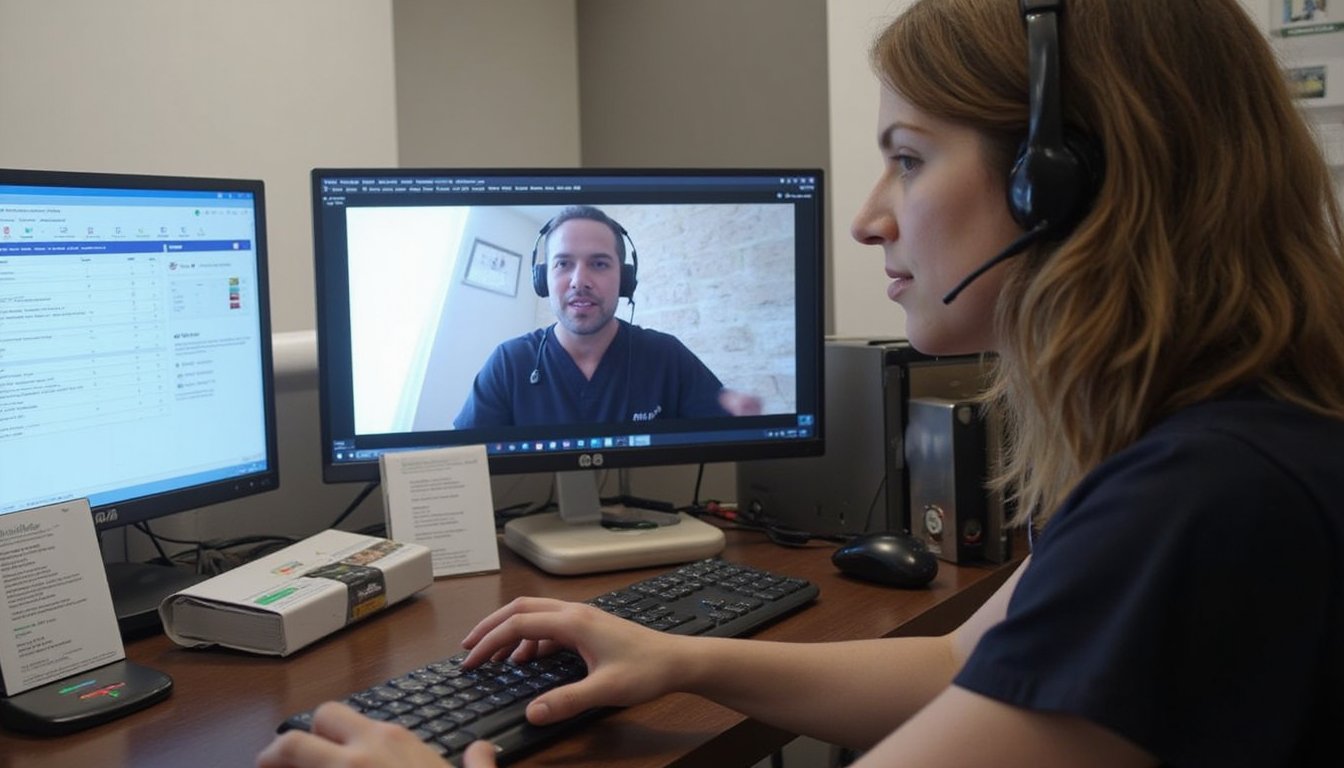
As telehealth platforms transform mental healthcare delivery, specialists who understand both clinical care and digital technology are in high demand. You’ll need proficiency in platforms like MEDvidi and KMG Medical systems, alongside expertise in telehealth integration strategies and digital patient engagement.
| Requirement | Qualification |
|---|---|
| Technical Skills | Digital platform mastery, EHR systems |
| Licensing | State-specific credentials, Telehealth certifications |
| Work Environment | Private workspace, High-speed internet |
Your role will involve guiding patients through virtual setups, managing remote sessions, and ensuring seamless care delivery through digital interfaces. With salaries ranging from $21-$96 per hour and full benefits packages available, this career path offers both flexibility and stability. You’ll also benefit from employer-provided technical training and credentialing support, making it easier to expand your practice across multiple states.
Community Mental Health Program Directors
Taking the helm of community-based mental health initiatives, Program Directors play a pivotal role in shaping accessible care for diverse populations. You’ll oversee program evaluation, forge community partnerships, and lead teams of clinicians while managing budgets and implementing data-driven strategies. With salaries ranging from $65,000 to $93,000, this role offers considerable growth potential, especially with advanced degrees and certifications. Female professionals dominate this career path with over 81% representation in the field. The position currently shows a male majority at 66.7% of program directors.
- Design and execute thorough mental health programs for underserved communities
- Supervise clinical staff and guarantee quality service delivery through evidence-based practices
- Develop strategic partnerships with schools, healthcare providers, and local agencies
- Analyze program outcomes to optimize resource allocation and improve patient care
- Implement crisis management protocols while adapting to emerging mental health trends
To succeed, you’ll need a master’s degree, relevant licensure, and 2-5 years of clinical experience. Your leadership can greatly impact community wellness while advancing your career toward executive roles.
Mental Health Policy Analysts and Advocates
While the mental health landscape continues to evolve, Policy Analysts and Advocates serve as essential change agents in shaping accessible, equitable care systems. You’ll analyze policy effectiveness, evaluate outcomes, and develop advocacy strategies to improve mental healthcare access across diverse populations. Professionals in this field often work in think tank environments to drive meaningful policy change. The field currently shows a relatively balanced workforce with 52.6% male analysts participating in policy development. With over 371,698 job postings currently available in the mental health sector, opportunities for policy and advocacy work are abundant.
| Role Component | Your Impact |
|---|---|
| Policy Analysis | Assess healthcare regulations and recommend evidence-based improvements |
| Data Management | Collect and interpret mental health service statistics |
| Stakeholder Relations | Partner with legislators and community organizations |
| Advocacy Work | Champion mental health reforms and funding initiatives |
| Research Leadership | Direct studies on systemic barriers and solutions |
With salaries ranging from $52,895 to $98,000+, this career offers growth potential. You’ll need strong analytical skills, policy expertise, and communication abilities. Advanced degrees can enhance your earning potential while expanding your influence in shaping mental health systems.
Crisis Intervention Specialists
Crisis Intervention Specialists represent one of the fastest-growing segments in mental health careers, with salaries increasing 29% since 2020. You’ll find diverse opportunities across healthcare facilities, women’s shelters, and community services, where you’ll apply crisis intervention techniques and trauma-informed care principles. In the U.S., you can expect to earn between $16.35-$25.00 per hour, while Canadian specialists earn an average of $62,880 annually.
- Entry-level positions start around $43,814, with mid-career professionals earning $48,422
- Strong demand in mental health associations and emergency response services
- Opportunities for advancement into leadership roles
- Competitive compensation packages including bonuses and profit-sharing
- Flexible work environments across urban and community settings
The field offers stability and growth potential, especially in major markets like Centennial, CO, where crisis response services continue to expand.
Cultural Competency Training Coordinators
Cultural Competency Training Coordinators offer an exciting path for professionals seeking to blend mental health awareness with diversity initiatives. You’ll design and implement programs that enhance cultural awareness while managing logistics and evaluating training effectiveness across organizations.
With salaries averaging $57,869 annually, you’ll need a bachelor’s degree in HR, education, or related fields, plus relevant certifications like SHRM-CP/SCP. The role requires strong program management skills and expertise in modern training techniques.
Your career growth potential is substantial, especially as organizations increase their DEI budgets and ESG commitments. You can advance to senior positions, pursue specialized certifications, or shift into leadership roles. The field’s evolution now encompasses virtual training formats and integration with mental health programs, making it an increasingly essential position in forward-thinking organizations.
Frequently Asked Questions
How Do Mental Health Professionals Maintain Their Own Psychological Well-Being?
You’ll need to prioritize robust self-care strategies to maintain your psychological health as a mental health professional. Start by establishing daily routines that include rest, exercise, and mindfulness practices. It’s crucial to connect with peer support networks through professional collaborations and mentorship programs. Remember to set firm workplace boundaries and take advantage of available mental health resources, including therapy and preventive care services.
What Certifications Are Required for International Mental Health Practice?
You’ll need specific international qualifications to practice mental health abroad. The PMHNP-BC™ requires additional documentation for international applicants beyond standard requirements. You must verify your existing credentials, obtain country-specific mental health certifications, and meet local regulatory standards. It’s crucial to research your target country’s licensing requirements, as they vary markedly. Consider consulting with international credentialing organizations to guarantee you’re meeting all necessary professional standards.
Can Professionals Switch Specialties Within Mental Health After Initial Certification?
Yes, you can make specialty shifts within mental health through additional certifications and training. Your initial certification provides a foundation, while certification flexibility allows you to expand into different areas. For example, you’ll find PMH RNs can shift to APRN roles, and counselors can add specializations in areas like substance abuse or trauma. You’ll need to complete required coursework and supervised clinical hours for your new specialty focus.
How Do Mental Health Careers Accommodate Professionals With Disabilities?
You’ll find mental health workplaces increasingly prioritize accessible workplaces through various accommodations. You can request reasonable adjustments like flexible schedules, remote work options, and adaptive technologies to support your professional practice. The ADA protects your right to these accommodations, and you’ll often work with employers through an interactive process to identify solutions. Professional networks and employee resource groups can help you navigate workplace accommodations effectively.
What Liability Insurance Requirements Exist for Independent Mental Health Practitioners?
As an independent mental health practitioner, you’ll need extensive liability coverage to protect against various practitioner risks. You must maintain professional liability insurance (minimum $1M/$3M) to safeguard against malpractice claims. You’ll also need HIPAA breach coverage ($25,000) and licensing board defense coverage ($35,000-$150,000). Consider additional insurance types like cyber liability for teletherapy and premises liability if you have a physical office. Always verify your state’s specific requirements.