






Sleep deprivation profoundly impacts your mental health through disrupted emotional processing and cognitive function. You’ll experience increased emotional reactivity, impaired decision-making, and reduced psychological resilience when sleep-deprived. Conversely, mental health conditions can trigger sleep disturbances, creating a challenging cycle where each factor worsens the other. Studies show that poor sleep doubles your risk of depression, while mental health challenges increase insomnia risk 17-fold. Understanding this intricate relationship reveals essential pathways for intervention and recovery.
The Hidden Connection Between Sleep Loss and Emotional Stability

Sleep loss directly impacts your psychological resilience enhancement, creating a cascade of emotional instability. During recovery periods, the brain exhibits REM sleep rebound, attempting to make up for lost emotional processing time. You’re likely to experience heightened anxiety, reduced positive affect, and impaired ability to regulate emotions effectively. Sleep quality and quantity are equally crucial for maintaining optimal mental health. Studies reveal that both total sleep deprivation and chronic sleep restriction lead to blunted emotional responses, with standardized mean differences ranging from -0.20 to -1.14 for positive experiences. Your capacity to recognize and process emotional cues becomes compromised, particularly affecting your ability to maintain stable mood states and cope with daily stressors.
Understanding the Brain’s Response to Sleep Deprivation
The brain’s response to sleep deprivation manifests through distinct neurological disruptions across multiple networks and systems. When you’re sleep-deprived, your brain experiences a collapse in the functional separation between default mode and cognitive control networks, leading to impaired focus and task performance. Research demonstrates that P300 latency increases significantly during sleep deprivation periods. Your hippocampal connectivity significantly decreases with multiple prefrontal regions, affecting memory processing.
Thalamic dysfunction effects become evident through erratic activity patterns, disrupting your brain’s ability to maintain stable arousal levels. These arousal instability consequences directly impact your attention, working memory, and reaction time. The amygdala activity increases, triggering heightened negative emotional responses. You’ll notice compromised performance in tasks requiring executive function, while your reward system becomes hypersensitized, increasing risk-taking behaviors. The breakdown in network segregation affects your ability to switch between internal reflection and external focus, while your insular cortex shows reduced activity during memory suppression and attention-demanding tasks.
Breaking the Cycle: Mental Health Disorders and Sleep Quality
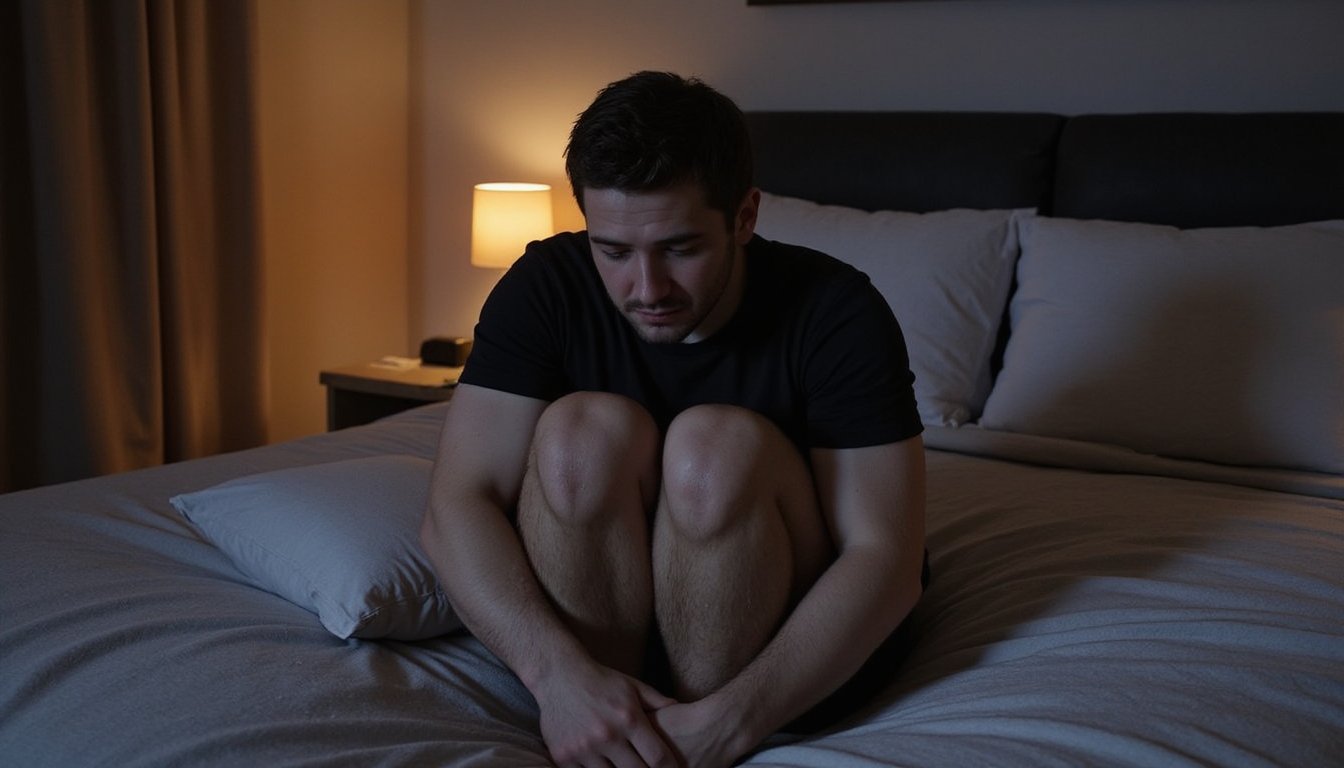
Many individuals caught in the sleep-mental health cycle face a complex bidirectional relationship where each condition exacerbates the other. If you’re experiencing mental health challenges, you’re up to 17 times more likely to develop insomnia, while poor sleep doubles your risk of depression. Your rumination patterns and stress levels can vitally impact sleep quality, creating a self-perpetuating cycle. Recent data shows that getting less than 6 hours of sleep per night significantly increases your likelihood of experiencing frequent mental distress. Studies indicate that one-third globally of elderly individuals experience depressive symptoms, highlighting the widespread nature of this issue.
Breaking this cycle often requires targeted cognitive behavioral interventions that address both sleep and mental health simultaneously. Research shows that improving your sleep quality leads to measurable improvements in depression (g+ = -0.63) and anxiety (g+ = -0.51). You’ll find that chronic stress and loneliness directly impair your sleep architecture, while psychiatric medications may induce sleep disruptions. Understanding these connections is indispensable, as greater improvements in sleep consistently yield stronger mental health outcomes. A comprehensive review of 65 clinical trials demonstrates that enhancing sleep quality significantly improves overall mental health outcomes.
Sleep’s Critical Role in Social Relationships and Cognitive Function
Sleep deprivation’s profound impact on social relationships operates through four distinct pathways: increased social withdrawal, diminished perceived attractiveness, impaired cognitive processing, and reduced participation in social activities.
Sleep loss affects our social world deeply, eroding relationships through withdrawal, appearance changes, cognitive decline, and reduced social engagement.
When you’re sleep-deprived, your capacity for perceiving social cues deteriorates noticeably, creating a cascade of interpersonal challenges. Brain scans show that prosocial networks become significantly less active during sleep deprivation. Research reveals that poor sleep quality directly affects your ability in maintaining interpersonal relationships through:
- Neural activation patterns that trigger social repulsion and decrease approach behaviors
- Impaired ability to suppress negative social memories while forming new positive ones
- Heightened sensitivity to perceived social threats and rejection
- Reduced willingness to engage in social activities, leading to smaller social networks
These effects create a self-reinforcing cycle where sleep disruption leads to social withdrawal, which can further exacerbate sleep difficulties and mental health challenges. Even brief interactions with sleep-deprived individuals can cause well-rested people to experience increased feelings of loneliness. The 2023 Surgeon General report highlights that social isolation has become a significant epidemic affecting mental well-being.
Who’s Most at Risk: Identifying Vulnerable Populations

Research identifies distinct demographic patterns in vulnerability to sleep-mental health disruptions, with certain populations facing disproportionate risks. Age-based disparities reveal that adults under 44 are more likely to attribute sleep problems to mental health, while those over middle-aged experience shorter sleep duration. Women and gender-nonconforming individuals demonstrate higher rates of sleep disturbances, with sexual identity considerations playing a pivotal role in risk assessment. Those experiencing three or more stressors are nearly twice as likely to report poor sleep quality compared to individuals with fewer life challenges. Students with mental health conditions like depression have significantly higher odds of developing insomnia symptoms.
Your socioeconomic status substantially impacts vulnerability, as lower education levels triple the odds of frequent mental distress. If you’re divorced, separated, or widowed, you’ll face twice the risk compared to married individuals. Employment status matters too; working college students experience double the likelihood of insomnia. These findings underscore how social determinants and demographic factors interconnect to influence sleep-mental health relationships.
Frequently Asked Questions
Can Certain Foods or Supplements Help Improve Both Sleep and Mental Health?
Yes, specific diet changes and herbal supplements can markedly enhance both sleep and mental health. You’ll benefit from foods rich in melatonin (tart cherries, pistachios) and tryptophan (turkey, quinoa). Magnesium-rich options like spinach and almonds support muscle relaxation and mood regulation. You can amplify these effects with evidence-based supplements such as magnesium, omega-3 fatty acids, and melatonin, which have demonstrated benefits for sleep quality and emotional well-being.
How Long Does It Take to Recover From Chronic Sleep Deprivation?
You’ll need substantially more than just a few good nights of sleep to recover from chronic sleep deprivation. Sleep recovery duration typically spans 7-10 days, and even then, you might not achieve full restoration. While your reaction speed may improve within a week, chronic sleep deficit impacts can persist longer, especially affecting your attention, executive function, and mood. Individual factors, including the severity and length of sleep debt, influence your recovery timeline.
Does Sleeping Too Much Have Similar Effects on Mental Health?
Yes, oversleeping causes fatigue and mental health issues similar to sleep deprivation. When you sleep more than 9 hours regularly or engage in excessive daytime napping, you’re at higher risk for depression, anxiety, and cognitive decline. You’ll likely experience memory problems, decreased energy, and impaired daily functioning. Research shows that oversleeping rarely occurs alone; it’s often linked to underlying psychiatric or organic conditions, creating a complex cycle of mental health challenges.
Are Naps Effective in Reducing Mental Health Impacts of Poor Sleep?
Yes, naps can effectively reduce mental health impacts of poor sleep, but nap duration and timing are pivotal factors. You’ll get the most benefits from brief 10-20 minute naps taken in the afternoon. These power naps improve your emotional regulation, reduce stress levels, and amplify cognitive performance without disrupting nighttime sleep. For ideal results, you should avoid longer naps that can lead to grogginess and potentially worsen sleep quality at night.
Which Meditation Techniques Work Best for Improving Sleep-Related Mental Health Issues?
Mindfulness meditation offers you the strongest evidence-based benefits for sleep-related mental health issues, showing significant reductions in depression and anxiety symptoms. When you combine mindfulness with breathing exercises, you’ll enhance the relaxation response that counteracts sleep-disrupting hyperarousal. You’ll get best results by practicing 20 minutes daily, focusing on present-moment awareness and controlled breathing. This approach has demonstrated large effect sizes (0.89) for improving both sleep quality and mental well-being.