




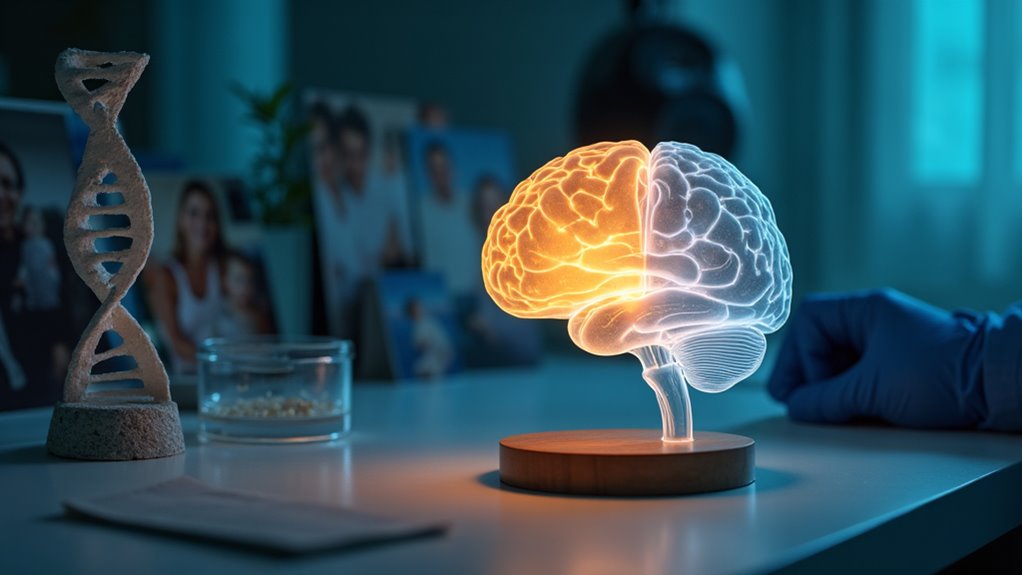

Bipolar disorder doesn’t have a single cause. You can inherit vulnerability through many genetic variants, each adding a small effect, and twin studies estimate heritability at 58%–85%. If your parent or sibling has it, your lifetime risk rises to 5%–10%, versus 0.5%–1.5% in the general population. Still, most relatives don’t develop it. Brain signaling, calcium-channel function, and life stress interact with that inherited risk. Below, you’ll see how each factor shapes your susceptibility and episode risk.
Key Takeaways
- Bipolar disorder has no single cause; genetic, biological, and environmental factors interact to shape whether it develops.
- Genetics play a major role, with twin studies estimating heritability at roughly 58%–85%.
- Having a parent or sibling with bipolar disorder raises lifetime risk to about 5%–10%, versus 0.5%–1.5% generally.
- Many genetic variants with small effects contribute, linked to synaptic signaling, calcium-channel function, and neurodevelopmental processes.
- Stressful experiences like trauma may contribute when combined with genetic susceptibility, but stress alone is not a sufficient cause.
What causes bipolar disorder

Bipolar disorder appears to result from an interaction of genetic, biological, and environmental factors, though researchers haven’t pinpointed a single cause. No one gene or one event is responsible. Current research on bipolar disorder etiology shows that inherited vulnerability can combine with life experiences to shape whether the condition develops. Twin studies estimate heritability at roughly 58%–85%, yet identical twins don’t always share a diagnosis, which suggests non-genetic influences matter. Bipolar disorder risk factors include a family history, differences in brain structure and signaling, and trauma or stressful life events. Still, these factors indicate susceptibility, not certainty. If you have a parent or sibling with the condition, your risk rises, but you’ll likely remain unaffected.
What role do genetics and family history play
Genetics and family history are major contributors to bipolar disorder risk, since the condition often runs in families. Twin studies estimate heritability at roughly 58%–85%, though figures vary by study and population. If you have a parent or sibling with the condition, your estimated lifetime risk rises to about 5%–10%, compared with 0.5%–1.5% in the general population. Still, most first-degree relatives don’t develop it.
Among bipolar causes, no single gene acts alone. Instead, many genetic variants each contribute a small effect. Genome-wide studies link these variants to synaptic signaling, calcium-channel function, and neurodevelopmental processes, offering clues about bipolar disorder pathophysiology. Because risk spreads across so many genes, you can’t use family history to predict your individual outcome. It signals susceptibility, not a diagnosis or fixed future.
How does brain chemistry contribute
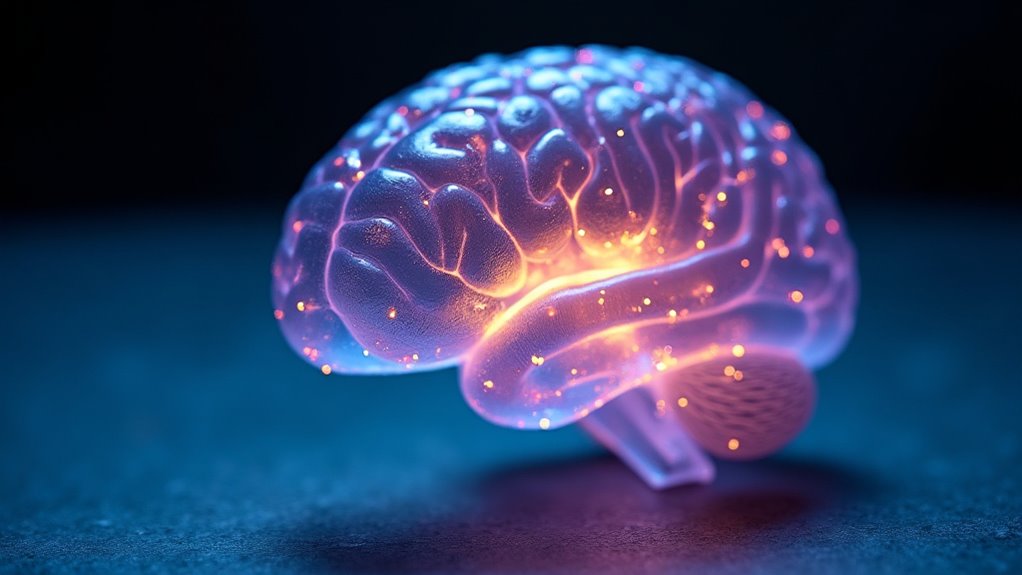
Brain chemistry contributes to bipolar disorder through complex biological processes that may differ from person to person, not through a simple chemical imbalance, despite how the condition is often described. You can picture three areas under investigation:
- Synaptic signaling: Think of nerve cells passing messages across tiny gaps. Genetic studies link risk variants to how these signals travel.
- Calcium-channel function: Imagine gates on cell surfaces controlling calcium flow, which helps regulate neuronal activity.
- Neurotransmitter pathways: Early candidate-gene studies targeted these chemical messengers, but you’ll find their results proved hard to reproduce.
Researchers haven’t identified one universal mechanism, and these findings don’t provide a diagnostic test. You should view brain chemistry as one piece of a multifactorial explanation involving genes and life experiences.
How does brain structure differ in bipolar disorder
In bipolar disorder, brain structure and function often differ in brain networks and processes rather than through a single abnormality that explains every case. Researchers find these differences among some people with the condition, and if you have bipolar disorder, your brain won’t necessarily show the same pattern as someone else’s. Genetic research links risk variants to synaptic signaling and calcium-channel activity, which shape how brain cells communicate. Twin imaging studies also suggest that genetic influences may affect white matter and connectivity between brain regions.
Keep these findings in context, though. They’re still under investigation, and they don’t provide a standalone diagnostic test. A brain scan can’t confirm or rule out bipolar disorder for you. Current evidence treats these differences as one part of a multifactorial picture.
How do sleep and circadian rhythm disruptions matter

Sleep and circadian rhythm disruptions matter as a frequent topic in discussions of bipolar disorder, but the evidence summarized here doesn’t identify them as an established cause. Instead, it supports a multifactorial model, where several influences interact:
- Inherited vulnerability: Picture risk spread across many small genetic variants, not concentrated in one gene.
- Stressful experiences: Imagine trauma or major life events acting on someone who’s already genetically susceptible.
- Brain-level processes: Visualize differences in synaptic signaling, calcium-channel function, and white matter connectivity.
If you’re tracking sleep changes, treat them as something to discuss with a clinician, not as proof of cause or diagnosis. Current research hasn’t pinpointed one universal mechanism, so no single factor, including sleep, explains why you or anyone else develops the condition.
Can substance use or stress trigger episodes
Stress may contribute to triggering episodes, but the evidence summarized here doesn’t address whether substance use does. Research suggests trauma and other stressful life events may increase your likelihood of illness if you already carry genetic vulnerability. Stress doesn’t act alone, though. It’s a potential contributor, not a sufficient cause, and it likely interacts with inherited risk rather than operating separately.
Identical twins support this view: when one develops bipolar disorder and the other doesn’t, non-genetic influences such as life experiences are probably involved.
Because substance use isn’t covered in the evidence reviewed here, you can’t draw firm conclusions about it from this summary. If you’re concerned about how alcohol, drugs, or stress affect your mood stability, discuss your personal history and specific risks with a qualified mental health clinician.
How do genetic and environmental factors compare
Genetic factors appear to carry more weight than environmental ones, but the two don’t act in isolation. Twin studies estimate heritability at roughly 58%–85%, yet identical twins can differ in diagnosis. That gap points to non-genetic influences, such as trauma or stressful life events, that may increase risk when you carry genetic vulnerability.
| Factor | What the evidence shows |
|---|---|
| Heritability | Roughly 58%–85% in twin studies |
| Genetic architecture | Many variants, no single causal gene |
| General population risk | About 0.5%–1.5% lifetime |
| First-degree relative risk | About 5%–10% lifetime |
| Environmental stressors | Contribute, but aren’t sufficient alone |
You shouldn’t read heritability as personal prediction. It describes population-level variation, not your individual outcome. A family history raises your likelihood, but most first-degree relatives remain unaffected. Genes and experiences likely interact rather than operate separately.
Why choose Quest Behavioral Health for bipolar care
Quest Behavioral Health treats bipolar disorder as a condition arising from interacting genetic, biological, and environmental factors, so your care addresses more than symptoms alone.
- Your family history, interpreted precisely. You’ll review relatives’ diagnoses as one risk factor, not a verdict, because most first-degree relatives don’t develop the condition.
- Your life stressors, mapped clearly. You’ll examine how trauma or other stressful events may interact with your genetic vulnerability.
- Your plan, built around you. You’ll receive care shaped by your history, experiences, and current symptoms, not by a single chemical-imbalance explanation.
No single brain scan or genetic test can diagnose bipolar disorder, so you need a thorough, individualized clinical evaluation. Contact Quest Behavioral Health today to start yours.
Your Family History Is a Risk Factor, Not a Verdict
Bipolar disorder arises from genetic, biological, and environmental factors interacting, so no single gene or scan can diagnose it. The team at Quest Behavioral Health interprets your history and stressors precisely through psychiatric services, building care around a thorough, individualized evaluation. Verify your insurance or call (833) 783-7888 to start yours.
Frequently Asked Questions
Can a Genetic Test Tell Me if I Will Develop Bipolar Disorder?
No, a genetic test can’t tell you whether you’ll develop bipolar disorder. Many genetic variants contribute to risk, and no single gene causes it, so individual prediction remains difficult. Heritability estimates describe populations, not your personal outcome. If you have a parent or sibling with the condition, your lifetime risk rises to roughly 5% to 10%, yet most relatives stay unaffected. Stressful life events and environmental factors also interact with your genes.
Can Bipolar Disorder Skip a Generation in Families?
Yes, bipolar disorder can appear to skip a generation. Because many genetic variants contribute, you can inherit vulnerability without developing the condition yourself, then pass it on. A grandparent and grandchild may both have bipolar disorder while the parent between them doesn’t. Identical twins don’t always share a diagnosis, which shows non-genetic, environmental factors matter too. If your grandparent had it, your risk may rise, but family history doesn’t make the condition inevitable.
Can Bipolar Disorder Develop Later in Adulthood Without Earlier Symptoms?
Yes, you can develop bipolar disorder in adulthood without earlier symptoms, though onset most often occurs in late adolescence or early adulthood. Because the cause is multifactorial, your genetic vulnerability may interact with stress or trauma at any age. If you notice new mood episodes later in life, you’ll want a clinician to rule out medical, neurological, or medication-related causes, since risk factors don’t establish a diagnosis on their own.
Can Children of Parents With Bipolar Disorder Lower Their Risk?
You may be able to lower your risk somewhat by managing stress, though you can’t change your genetic vulnerability. Having a parent with bipolar disorder raises your estimated lifetime risk to about 5%–10%, yet most first-degree relatives remain unaffected, so you aren’t destined to develop it. Trauma and other stressful life events may increase the likelihood of illness in genetically vulnerable people, which is why managing stress may matter. Still, current evidence doesn’t confirm a proven prevention strategy, and risk factors don’t determine your future.
Is Bipolar Disorder Linked to Other Mental Health Conditions in Families?
Yes, bipolar disorder in families is linked to other mental health conditions, so your family’s history may extend beyond bipolar disorder. Research shows many genetic variants contribute to bipolar disorder, involving synaptic signaling, calcium channels, and neurodevelopment. These pathways may not be unique to one diagnosis, and genetic studies report shared risk with schizophrenia and depression. Family history cannot predict your individual outcome. It signals susceptibility, not certainty. Discuss your family history with a clinician.